The Alchemist's Ways · Sacile

Where everything began.

The Garden of the Serenissima, between the river that remembers, Palazzo Ragazzoni and a saga that keeps returning here.

History

A city shaped by water.

Sacile grew in a strategic place where a major overland route met the navigable Livenza River, a corridor for trade and power. On 3 January 1190 it received privileges, immunities and broad autonomy from the Patriarch of Aquileia; its municipal statutes developed from the early thirteenth century.

From the fifteenth century the city entered the Venetian sphere and, from 1420, developed under the shadow of the Serenissima. This long season shaped the Renaissance appearance of the historic centre and the name still used today: the Garden of the Serenissima.

The Livenza is not simply a backdrop. It enters the town, draws its banks, reflects its palaces and preserves the sensation of Venice translated into the Friulian mainland.
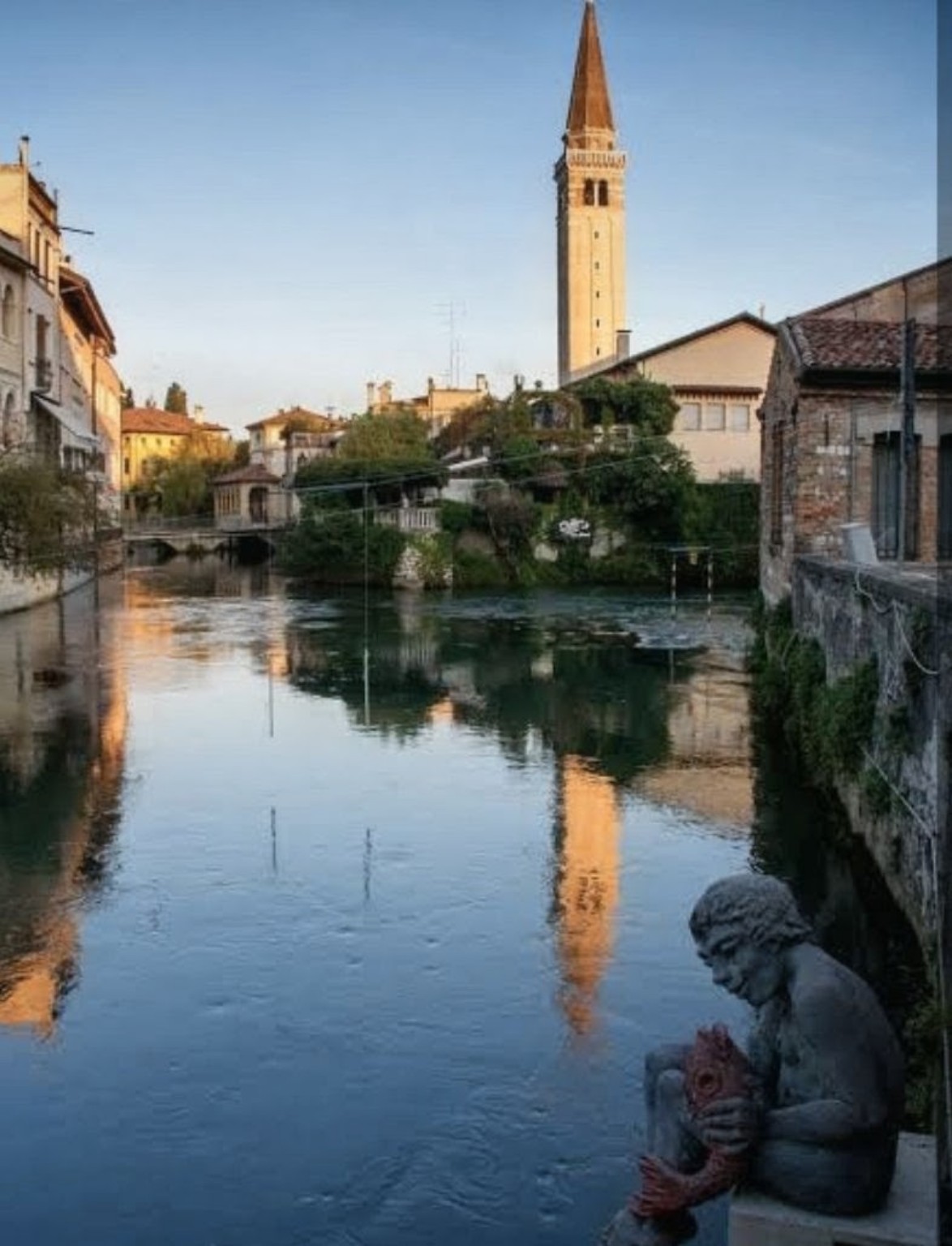
Sacile and the Livenza River in the Garden of the Serenissima
Urban memory

The Tower of the Moors.

Among Sacile's historic symbols was the Port Tower, later the Clock Tower and finally the Tower of the Moors. In 1483 Marin Sanudo described it with two wooden figures striking the hours on an ancient bell cast in 1397.

The tower was damaged in the twentieth century and finally demolished in 1939, yet the Moors and its memory remain part of the city's identity. It is also a fitting image for the narrative project: Sacile preserves traces of what no longer exists, just as a novel preserves places, voices and presences beyond time.

Palazzo Ragazzoni

A house inside European history.

In the sixteenth century Giacomo Ragazzoni, a Venetian merchant, shipowner and diplomat, transformed his Sacile residence into a hub of international relations.

In July 1574 Henry III of Valois, King of France, was welcomed by Ragazzoni in Sacile while travelling towards the French crown. The palace also hosted Maria of Austria, daughter of Charles V and widow of Emperor Maximilian II.

The palace frescoes still preserve the memory of these connections with Europe's great courts.

From the first novel

This is where The Alchemist of Sacile begins.

Set between 1570 and 1590, The Alchemist of Sacile turns Palazzo Ragazzoni and the waters of the Livenza into a narrative stage where the history of the Serenissima meets Isabella Cortese, Paolo Sarpi, Giordano Bruno and the tensions between Venice and Rome.

In the novel the palace becomes refuge, laboratory, diplomatic stage and place of secrets. Henry III's historically documented visit enters the fictional imagination and becomes one of the points where Sacile's real history gives the novel something that does not need to be invented: a European court that truly passed through those rooms.

The city where the Livenza inspired a story, and where that story keeps returning.
Territorial credential

Pro Sacile A.P.S.

The journey of The Alchemist of Sacile was supported from the beginning by Associazione Pro Sacile A.P.S.. The introduction to the volume is signed by Umberto Carcò.

This is not decorative recognition: it connects the novel to the city that gave it its name and strengthens the territorial nature of the entire project.

The return

The Reckoning brings Isabella back to Palazzo Ragazzoni.

A new identity

In the second novel Isabella chooses to re-enter society and returns to Sacile under a false identity, accompanied by Lucrezia. Palazzo Ragazzoni hosts a reception for Maria of Austria and once again becomes a place where truth and disguise coexist.

The gold returns

The alchemical gold objects created years earlier in Sacile re-emerge and become a dangerous trail. The memory of the first novel is not merely mentioned: it becomes a mechanism in the new plot.

Ragazzoni wounded

When the Illegitimate wounds Giacomo Ragazzoni, Isabella decides to return once more to Sacile carrying the antidote that might save him. The city becomes both the origin and the point of return of the saga.

History and fiction

Two levels, one city.

Henry III, Maria of Austria, Giacomo Ragazzoni, the Livenza and the memory of the Tower of the Moors belong to Sacile's documented history. Isabella Cortese, the secret laboratories, alchemical gold and the saga's plot belong to the novel.

The strength of this stop lies precisely here: not in confusing the two levels, but in making them speak to one another. Visitors can recognise the real place and at the same time understand how it has been transformed into narrative.

Continue the journey

From the Livenza to the other Ways.